
How to Log Your Astrophotography Sessions (And Why It Matters)
You took an image you’re proud of. Someone asks about it — maybe online, maybe a friend — and the first question is simple: what were the conditions like? And you freeze. You know you shot it sometime last month. You’re pretty sure it was a new moon. The filter… was it the dual band or the broadband? The sub length — was that 180 seconds or 300?
The image is right there. But the story behind it is already gone.
That’s the gap a session log fills, and it’s a gap most people don’t notice until they need information they didn’t save.
A session log does two things: it lets you compare the same target across different sessions over time — with different gear, conditions, or locations — and it preserves details that your memory simply won’t. The images alone can’t tell you the full story. The log can.
Let’s dive into what that actually looks like in practice.
What You’re Losing Without One
When you image from a light-polluted sky, every variable matters. Your Bortle level is just one data point in a much bigger picture. Moon phase, filter choice, how long you imaged, how many subs you kept, what equipment you were running — all of it shapes the result.
And your location isn’t always going to be the same. Maybe you’re imaging from a backyard now and a balcony next month. Maybe you take your rig to a dark site once a season. Maybe you’re just shooting from a slightly different angle because you moved a table. Those differences matter when you’re trying to understand why one session on the same target turned out better than another.
Without a log, all of that context disappears. You’re left with a processed image and a vague memory. You can’t compare. You can’t learn from it. You can’t explain it to anyone — including yourself six months from now.
What a Session Log Actually Looks Like
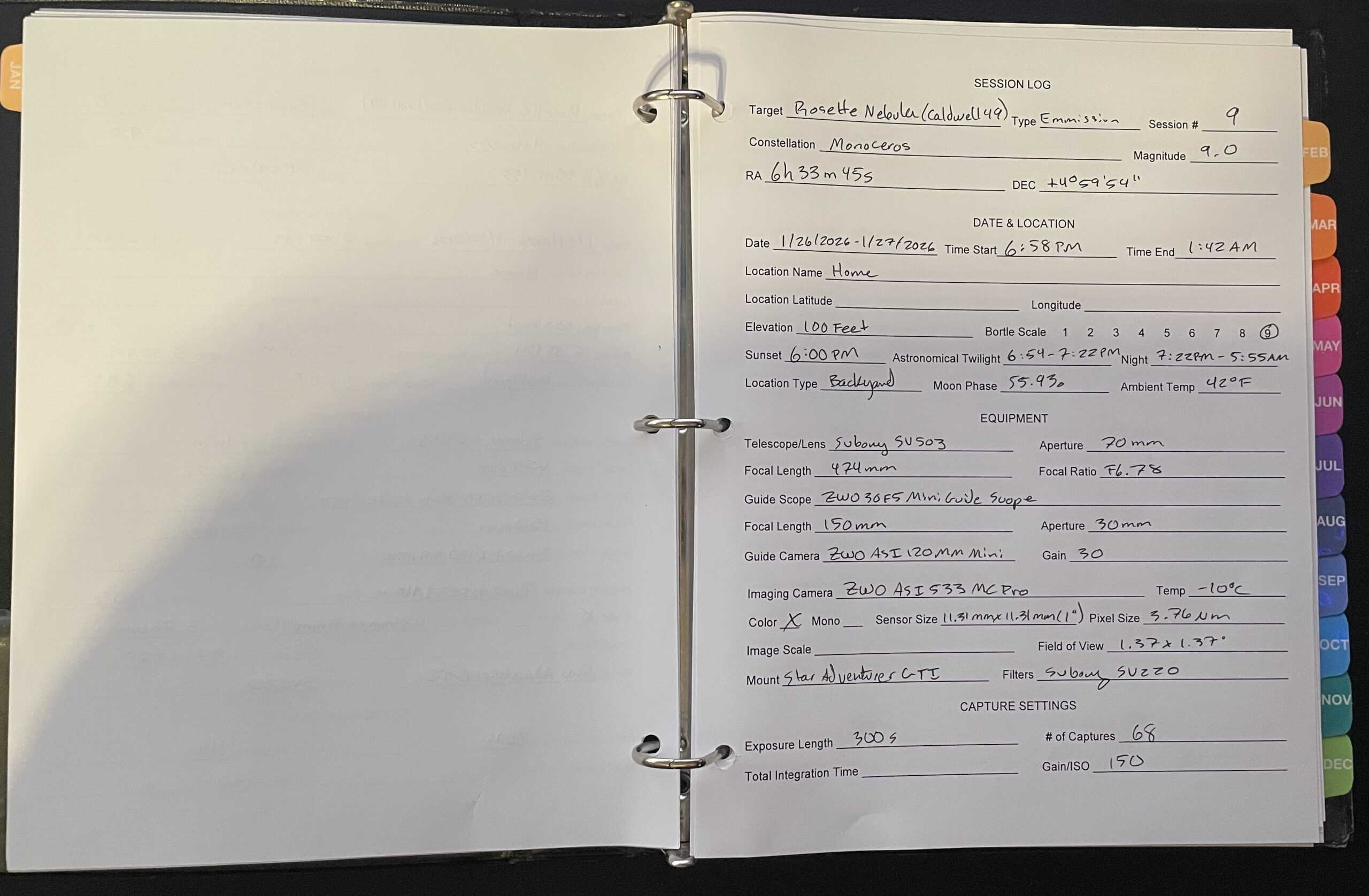
There’s no single right format, but there is a structure that covers the ground. My session log breaks into five sections:
Target details — constellation, object type, position in the sky.
Imaging location — backyard, balcony, dark site, elevation.
Session conditions — moon phase, sunset time, session start and end time.
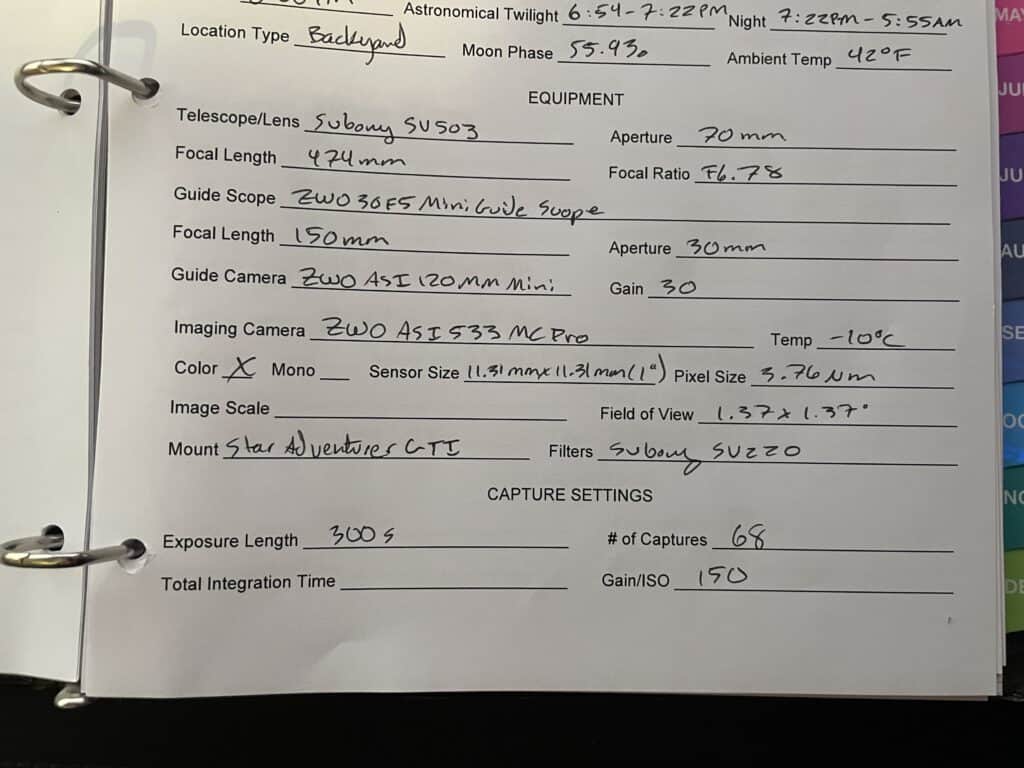
Equipment — telescope, camera, guide scope, tracker, filters.
Session data — sub length, number of subs, total integration time.
This didn’t start out this organized. For a while, there was nothing at all — no system, no notes. The breakdown came when I tried to remember the details of a session after the fact. When it was taken, what the moon was doing, what the conditions were. Without that context, an image is just an image. You can’t connect it to anything. The log gives the image its story.
The Minimum Viable Log
You don’t need all five sections on day one. If you’re just getting started, track the things that change most often and deliver the most value:
Moon phase. Start and end time. Target name. Sub length. Number of subs. Total integration time. Filters used. Location.
That’s eight data points. Equipment and sky position tend to stay consistent for most people — same rig, same spot — so those can come later as your system grows.
As for tools, keep it simple. A spreadsheet works. A spiral notebook works. A notes app works. I built a custom form for myself, but the format matters far less than the habit. Pick whatever you’ll actually use after every session.
When It Actually Pays Off
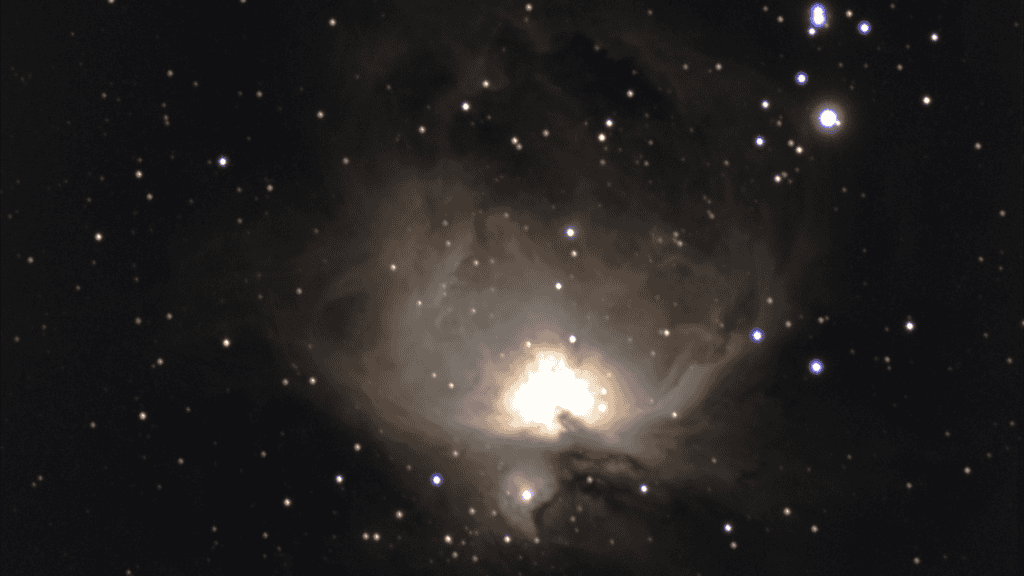
The clearest moment a session log earns its keep is when you’re imaging a target across multiple nights — especially when there’s a gap between capture and processing.
You sit down to stack, and you’ve got data from three different sessions spread over two weeks. The log makes it easy to know which sessions go together, what conditions each one had, and whether they’re worth combining. No guesswork. No opening random folders trying to remember what happened on which night.
This gets even more useful if you’re running two targets in the same session, which I covered in How I Image Two Targets in One Night Using Different Filters. When you’re splitting a single night between objects, having a clean record of what you shot, when you switched, and how much data you collected on each target is the difference between organized processing and chaos.
Final Thoughts
If there’s one thing I’d tell someone just starting a logging habit, it’s this: log after every session. Don’t let them pile up. The longer you wait, the more you have to catch up on, and the less you’ll want to do it. Staying current keeps it fast — a few minutes at most — and that’s what makes it sustainable.
A session log isn’t glamorous. It’s not going to show up in your final image. But it’s one of those small systems that quietly makes everything else better — your comparisons sharper, your processing smoother, your memory of this journey more complete. And when you look back a year from now, you’ll be glad you kept it.
Tagged
In This Post
Current Setup
Equipment links are affiliate links – they help support this site at no cost to you.